Today Katie Keier at Catching Readers Before They Fall inspired me to try the book spine found poetry idea suggested on the Stenhouse bolg a few weeks ago. As I stood in front of my bookcase, it was amazing to think of all the combinations I could make. I decided to find two - one to reflect the reading work I do with students and one to reflect my writing work. I think it would also be fun to try this activity with children's books. I wonder what combinations of ideas kids would come up with? It might be a great end of the year activity!
Look on your bookshelf - poetry is everywhere!
 
Changes 04/25/2012
 
Yesterday at our teacher inservice we were discussing how many things in education have changed over the last ten years or so. There have been changes in the way we deliver instruction, the way we set up our classrooms, and in the expectations for student learning. But perhaps one of the biggest changes impacting the classroom today is the integration and use of technology.

I am by no means a digital native. I am coming along in my understanding and use of technology, but I have quite a lot to learn. However, my journey with technology has brought about many changes in the way I teach and learn. Just a few years ago I remember being saddened to think that books were going to be available on a digital device. Not for me, I thought. I need to have the feel of the book in my hand and be able to turn the pages. I am now on my third Kindle, so change in thinking is possible.

Recently I discovered a neat app called Pocket. It allows me to download articles and store them for future reading when I have more time, like waiting in the doctor’s office or even standing in line at the grocery store. This week I read articles on conferring, ideas for writing poetry, and the importance of nurturing curiosity and creativity in young minds.

Last November I was totally mesmerized by all the tweeting going on at the NCTE Conference. It was amazing to me how everyone was so connected and learning from each other in new ways. I felt as if I were missing out on something important! Since I am not able to attend the IRA Conference next week, I wanted a way to stay in touch with the hottest new ideas and share in the excitement and new thinking going on. So, just this week, I joined Twitter. I wouldn’t say I jumped in with both feet, but my toes are definitely getting wet. I haven’t actually tweeted yet, but I have been following a few people, and I hope to learn more as I go along. (By the way, if you have any tips, please let me know.)

Change can be difficult. Often we get comfortable in the way we’ve always done things because it’s always worked out fine. But it’s important to stretch, take a few risks, and continue to grow. It’s important for us as well as our students. Best of all, it can be exciting!

 
Reflecting 04/15/2012
 
I’m preparing to speak to a group of college juniors this week who are being inducted into a reading honor society, so I spent much of the morning reflecting on my journey as an educator and author (the topic I was asked to speak about.) I thought it very fitting since I chose “reflect” as my one little word for 2012 (see blog post from 1/11). I started searching through some old pictures and files and came across something I wrote in 1995 as part of a course I was taking:

            Over the past several years I have experienced a great deal of professional growth. But, there are 
    many more books to read, changes to make, and children to help grow in literacy. Sometimes I feel I 
    have started down a never-ending road where the journey is exciting, sometimes surprising, and always 
    inwardly rewarding. One thing I have learned from the professionals is that becoming an effective teacher 
    takes time. I will continue to read, reflect, and learn from others.

I wrote that seventeen years ago, twenty three years after starting my teaching career, and I feel the same way today. Even though I have been in the field for a long time, in many ways I know I have only scratched the surface of what there is to learn. Working with and sharing ideas with teachers, as well as reading and writing professionally have helped shape who I am as an educator, but there is always more to learn. The electronic world has definitely opened up new avenues of learning for me, and I look forward to expanding my knowledge in that area.

So, to all of you out there who have played or will play a part in my never-ending journey, I thank you. I’ve still got “miles to go before I sleep.”


It's not hard these days with blogs, facebook, and twitter to stay connected to the educational community and learn the latest in research and ideas. But part of that connecting also means belonging to professional organizations. Belonging makes you part of something much bigger than yourself, and there is always power in numbers. It ignites your passion and puts you in touch, face to face, with people you may otherwise never have met.

I belong to several organizations at the national, state, and local levels, and I can honestly say that the benefits of membership for me have been far-reaching. Yes, there are the journals, newsletters, and reduced conference registration fees, but there are also those intangible extras. Recently, the membership director of KSRA (Keystone State Reading Organization), Connie Unger, asked members to write about why they joined KSRA in the hopes of influencing other teachers to join. I responded by focusing on three things: passion, people, and perspectives. All are important, but to me it is the people I have met that stand out the most. Teachers, authors, researchers, and publishers have guided me to new thinking and challenged me to learn more.

Whether you are a new or a seasoned teacher, I encourage you to reap the rewards of becoming involved in a professional organization. If you already belong, I'd love to hear what you think.
 
 
You just can't deny the power of the read aloud to build community, reach into the hearts of students, model good reading strategies, and...simply share a good story. Most of my day is broken up into a whirlwind of half hour periods with small groups of students K-5. Although I try to share stories and poems as often as possible, sometimes the urgency of the needs of my students causes me to forget that I also need to make time for other things that are important. So today, in celebration of World Read Aloud Day, I made it a point to share a favorite read aloud with all my groups. We did our word sorts, practiced fluency, built vocabulary, and applied comprehension strategies, but we also shared a story - and that can make all the difference.

Be sure to check out the Stenhouse Blog where you can listen to several wonderful authors read from their work.
 
 
I’ve been reading Peter Johnston’s new book Opening Minds. Yesterday I happened to read the section where Peter stresses the importance of making sure our students understand their own processes:

            Causal process comments are the most effective way of promoting the belief that the important 
             information is how someone did (or could do)
something, because that’s what we can learn from.

Coincidentally, just that morning one of my second graders was able for the first time to explain exactly how she figured out a word using strategies that had been demonstrated and explained many times. What a breakthrough for her!

It has become almost second nature for me to ask a student how they figured out a word when they are reading, or why they used a certain beginning or perhaps a particularly good vocabulary word in writing. With our youngest readers and writers, sometimes it takes awhile for them to understand that they did it for themselves and to put the strategy into words, but when it does happen there is definitely cause for celebration. Sometimes I think that day will never come, and I’ve learned that I need to be patient – sometimes very patient. My favorite response to the question “How did you figure that out?” is “My mother told me.” I suppose in the mind of a child, mothers are pretty much responsible for all good things!  But eventually, like today, they learn what they were able to do themselves.

 Once I was listening in to two first grade struggling readers doing some partner reading. When they got to the end of the page and were ready to turn, one of the boys said to the other, “Let’s go back and look at this word. It made sense and sounded right, but it doesn’t look right!”  They then proceeded to figure it out together. It was an important moment for them (and for me!). For some the learning takes time, but  it’s always worth the wait.


Picture
It was one of those busy mornings. I got to school just in time for an early morning meeting which was followed by a second impromptu meeting which meant I would barely have a chance to store my coat and lunch before meeting with my first group of the day. That’s when I found it. A letter, you might even call it a love letter, from one of the kindergarten students I work with.

Looking at it from a teacher's perspective, it is a fantastic authentic assessment of what this child has learned and can apply. But more than that, it was just what I needed at just the right time. Because it was one of those busy mornings where I start questioning the worth of it all, this little guy’s note put it all in perspective. That’s why I do this.

I don’t know if this is the first love letter this kindergartener has written, but I’m willing to bet that it won’t be his last.


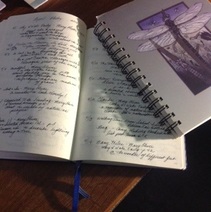
A few weeks ago, after enjoying some delicious sushi from my favorite Chinese restaurant, I discovered this message inside my fortune cookie: Leaders are readers. It was an unusual fortune, I thought, but one that made a lot of sense to me. It was something I thought I needed to reflect on, so I pasted it inside my writer’s notebook.

So what are the implications? The first thing about this little fortune that strikes me is that it can easily be reversed: Leaders are readers, and readers are leaders. In fact, it’s hard to tell which might come first. If you are a reader, you are armed with the knowledge that can make you a leader. You understand the world better and can gather information to make decisions that help you lead a better life. I think of the readers in our classrooms. They are usually held in high esteem in the classroom community (especially in the primary grades) -  someone to look up to, to want to be like. So whether they choose it or not, the readers in our classrooms are usually the leaders.

When we think of it the other way around (the way it was written) – Leaders are readers – I think it speaks to the responsibility we bear as teachers. We are the leaders in our school community, so it is up to us to keep informed. We need to read professionally so that we can bring the best strategies to our students and layer our thinking with the latest research and understandings. Teachers who are readers are the ones colleagues go to for ideas or for help in thinking through a difficulty.

It is perhaps coincidental that one of my fourth grade students asked me this week why the Statue of Liberty is holding a book. That question sparked a discussion in the small group around symbols in general, and what the book symbolizes in particular. Although we have since found out that the book is a law book, our discussion centered around the book as a symbol of knowledge, and the importance of knowledge as it relates to freedom. It was a high level discussion for these struggling readers who understood the importance in their lives of being able to read well.

Leaders are readers. What ideas does it spark for you?


I recently had the opportunity to review two new books as possibilities for the 2012-2013 Keystone to Reading Book Award list. A Nation’s Hope: The Story of Boxing Legend Joe Louis (2011, Penguin) by Matt DeLa Pena and illustrated by Kadir Nelson is a fabulous book that pulls the reader in from the beginning. The author’s style of writing in the present tense takes us to Yankee Stadium in 1938 where we are about to witness the historic fight between Joe Louis and Max Schmeling. We feel how tense this moment is:
     “The weight of history hangs on Joe’s shoulders
      as he ducks through ropes…”
But just as the fight is about to begin, the author, writing now in the past tense, takes us back in time. We learn the story of Joe Louis and how he became a hero for his Harlem neighborhood. We learn the importance of this fight and how it came to represent America’s war with Germany. And then, once again, we are watching as Joe Louis defeats Schmeling.
    “The streets of Harlem once again dancing 
      for their hero
    But all of America dancing this time”

Butterfly Tree (2011, Peachtree) by Sandra Markle and illustrated by Leslie Wu tells the story of a young girl who experiences a wonder of nature - the migration of monarch butterflies - as she is out walking along the beach with her mother in early fall. In the author’s note found at the end of the story, Sandra Markle lets us in the inspiration for the book – a personal experience with migrating monarch butterflies. What a wonderful example for young readers about using their memories to fashion stories. As with A Nation' Hope, the use of the first person and present tense pulls the reader in from the very beginning of the book. The author provides additional information about monarchs and several  books and websites where more information can be found. This is a book that creates a sense of wonder and excitement, then helps the reader continue the journey.

I think there are lots of writing, reading and cross-curricular lesson opportunities with A Nation's Hope and Butterfly Tree. They are both beautiful books that I think should find a place in your school, classroom, or personal libraries.


It’s wonderful to discover a new book that quite unexpectedly becomes a mentor text for a group of young writers. A few weeks ago I was sent some books from Chronicle Books to review for our state’s Keystone to Reading Elementary Book Award (for more on this go to www.ksrapa.org and click on Teacher Resources). One of the books was Over and Under the Snow by Kate Messner. This remarkable book, reminiscent of the classic Owl Moon, tells the story of a child’s cross-country ski outing with her father. When the little girl notices how a red squirrel quickly disappears in the snow, her father tells her of the “secret kingdom under the snow.”  She then goes on throughout the rest of the book to compare what she is doing “over the snow” to what is happening “under the snow.”

On my first read I was struck by the poetic language which helps to create the child’s sense of wonder and discovery. I loved the way Messner compares and contrasts the activities over the snow and under the snow. And, I was not disappointed to find that the author continues to delight us even after the story is finished. In the author’s note she gives a more scientific explanation for the secret kingdom, gives more information about each of the animals mentioned, and suggests resources to find out more about animals in winter. I couldn’t wait to share it with some young readers and find out what they thought!

At school, I gave the book to first grade teacher, Connie Harker, who shared it with her class. As you can expect, her students loved it as much as we both did. In fact one little girl, Willow, suggested that the class could make a book just like that. Together with Connie they brainstormed how that might look, and it wasn’t long before words and ideas were shared and recorded. Over and Under the Snow served as an important mentor text, providing the right scaffold for these young writers to share what they knew or learned.

When students are a part of a writing community, they help to shape the curriculum. When their ideas are honored, they feel a connection to what is going on, and they move forward as writers and learners.